
Off-Grid Water Storage: Sizing and Choosing the Right Tank
How much water should you store for off-grid living, and which type of tank fits your location?
Start with your daily water use, the time between refills, and the space available. Then compare containers based on how you will transport, install, and use them.
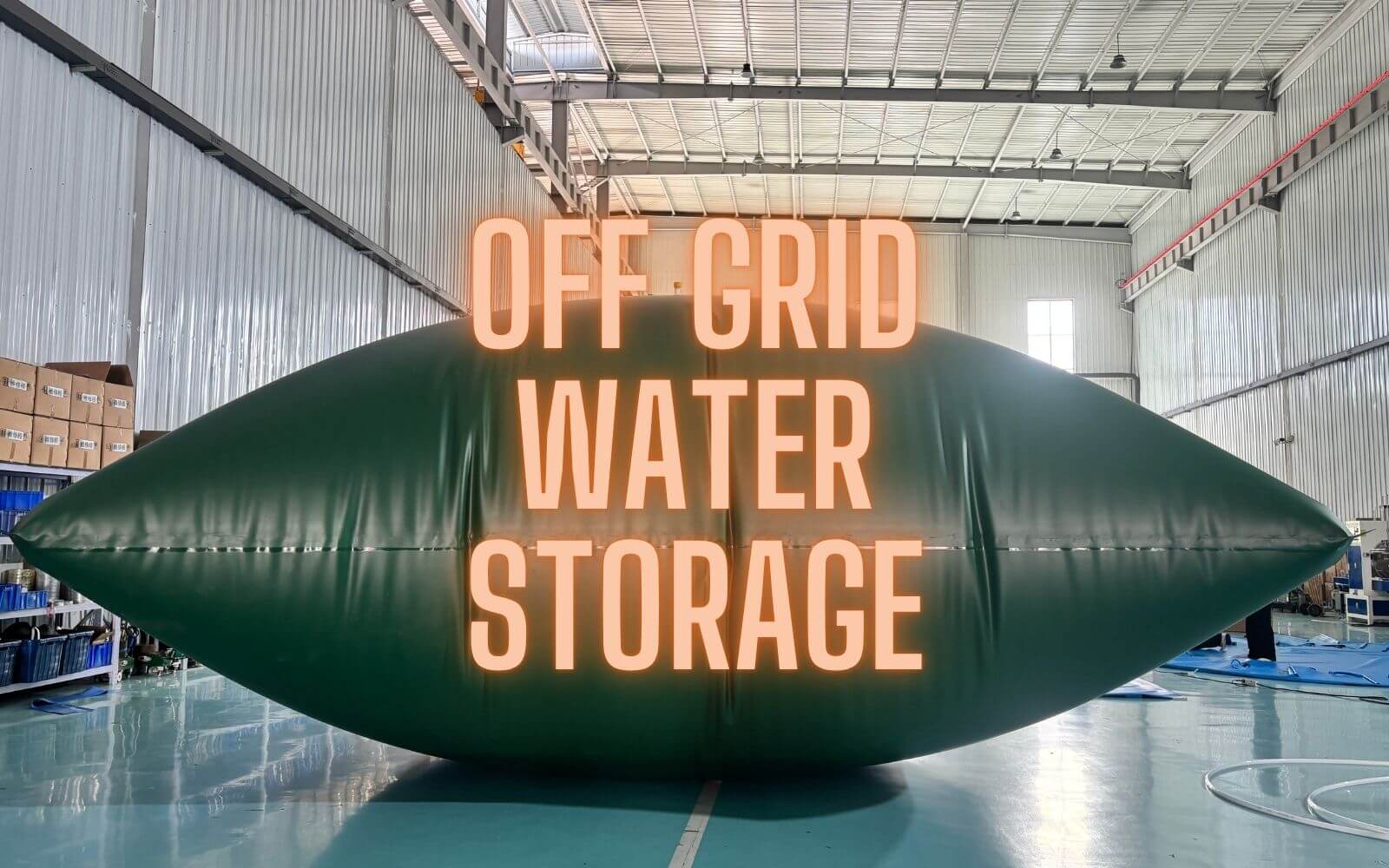
A flexible pillow tank is one option, particularly when empty-container transport and straightforward deployment matter. Here is how to assess your storage needs and choose a suitable tank.
What Will You Use the Water For?
Decide which activities the tank will supply: drinking, cooking, showers, laundry, toilets, cleaning, or irrigation.
Count only the uses that depend on this tank. A container supplying drinking and cooking water will need less capacity than one serving the whole household.
Choose the material according to the water’s intended use. Flixtank(FX) offers TPU water bladders for drinking-water storage and PVC water bladders for non-potable uses, such as irrigation and cleaning.
The tank stores water; any treatment needed to make the water suitable for its intended use is a separate step.
How Much Off-Grid Water Storage Do You Need?
Use this calculation as a starting point:
Required storage = daily water demand × days between refills + reserve
Estimate Your Daily Water Use
Use actual consumption where available. For a new location, list the activities the tank will supply and estimate their combined daily demand.
Consider more than the number of people. Showers, laundry, toilets, and outdoor watering can substantially change the amount you need.
Determine the Time Between Refills
How long must the stored water last before you can reliably replenish it?
For delivered water, use the delivery schedule. For an intermittent source, consider the periods when replenishment may be limited.
If rainwater is your main source, account for dry periods and seasonal changes rather than relying only on average rainfall. Storage planning needs to compare available water with demand over time. The U.S. Department of Energy’s rainwater sizing guidance explains this approach.
Allow for Delays or Extra Demand
Add a reserve based on your circumstances, such as a delayed delivery or visitors staying at the property.
Example: A residence uses 200 litres per day, receives water every seven days, and needs a reserve for a two-day delivery delay.
| Requirement | Calculation | Water needed |
|---|---|---|
| Normal use between refills | 200 L × 7 days | 1,400 L |
| Two-day reserve | 200 L × 2 days | 400 L |
| Total | 200 L × 9 days | 1,800 L |
Use your calculated storage requirement to check the tank’s capacity and filled dimensions.
Compare Off-Grid Water Storage Containers
The right container depends on your capacity needs, access to the site, installation conditions, and whether storage will be permanent or temporary.
| Container | When to consider it | What to check |
|---|---|---|
| Above-ground rigid tank | You have a fixed storage location and suitable delivery access | Tank dimensions, supporting base, and installation requirements |
| Underground tank or cistern | You want to preserve surface space and can arrange excavation | Ground conditions, backfill requirements, and maintenance access |
| Small portable containers | You need modest quantities at separate points of use | Filled weight, carrying distance, and number of containers |
| IBC containers | You want storage in individual units and have suitable handling access | Intended use, handling equipment, and connections |
| Flexible pillow tank | Empty-container transport, deployment, or later storage matters | Filled footprint, ground condition, material, and fittings |
Small portable containers suit a different scale of use from IBCs. For example, Reliance offers hand-carried containers in 15- and 26-litre sizes, while pallet-based IBCs require different handling arrangements.
You will also encounter cisterns when researching off-grid water storage. Check the specific design and installation method. An underground cistern requires a model designed for burial and the appropriate installation and backfill work.
When a Flexible Water Bladder Fits Your Needs
Transporting a large empty tank to a remote property can influence your choice. A flexible pillow tank folds for transport and unfolds at the storage location.
This can be useful when:
- Access makes transporting a bulky empty container difficult.
- You want to deploy storage without excavation.
- Storage is seasonal or temporary.
- You need to drain and pack away the container later.
The transport and storage benefits apply to the empty bag. Once filled, it needs enough space for its full dimensions and ground that can support the stored water.
Prepare the Site and Connect the Tank
Choose a Suitable Surface
Place an Flixtank pillow tank on level ground, clear of sharp objects that could puncture the bag. The surface must support the tank when full.
Plan around its filled dimensions and leave room to reach the fittings and inspect the connections. Ground placement normally needs no special construction beyond suitable site preparation.
If you plan to use an elevated platform, have its capacity checked for the full load.
Connect the Inlet and Outlet
The inlet connects to your water source, such as the outlet from a rainwater collection setup or a prepared filling pipe. The outlet connects to the pipe supplying your home or other point of use.
FX’s usual fittings are:
| Connection | Standard arrangement |
|---|---|
| Inlet | Flange + DC cap |
| Outlet | Flange + ball valve + C coupling |
The outlet coupling connects to a compatible hose secured with a clamp. Confirm your pipe sizes and connection requirements before ordering.
Air Breather on the Bladder
An air breather allows trapped air to escape during filling, preventing the bladder from inflating with air.
FX normally fits one on tanks above 5,000 litres. It is also available for smaller tanks, where air can be released manually according to the tank’s instructions.
Gravity Flow or a Pump?
If the tank sits above the point of use, the height difference can provide gravity-fed flow. Whether it supplies enough pressure depends on the elevation and the requirements of your fixtures.
Where gravity provides insufficient pressure, connect a suitable pump. Consider this when planning the tank’s location and outlet connection.
What About Winter Use?
Cold-resistant tank material does not prevent the water inside from freezing. Outdoor winter use requires separate planning for the stored water, fittings, and connected pipes.
Include your winter conditions when discussing the tank configuration, especially if it will supply water throughout the year.
Prepare These Details Before Choosing Your Tank
Once you know how much water you need to store, gather:
- Required capacity.
- Drinking-water or non-potable use.
- Available site dimensions.
- Filling arrangement and pipe sizes.
- Gravity-fed or pumped delivery.
- Seasonal or year-round use.
For an Flixtank flexible water bladder, share these details so the capacity, material, filled dimensions, and fittings can be matched to your location and water needs.